View more Charts Related to IKS
The public consultation is open from 15 August 2026 to 11 September 2026.
Notes
Notes
- Two kinds of vidyā are to be known: the Parā and Aparā — Muṇḍakopaniṣad 1.1.4: Dve vidye veditavye iti ha sma | yadbrahmavido vadanti parā caivāparā ca || IKS explicitly mentions only the Aparā, while the Parā is implicit & experiential — Raghavan, M., Saṃvādasaṃgrahaḥ, pp. 30–67. Parā and Aparā are not viewed as hostile or mutually exclusive opposites, but as complementary stages of human comprehension.
- The core system recognizes 14 Vidyāsthānas (Caturdaśa Vidyā-s), which expand to 18 Vidyāsthānas (Aṣṭādaśa Vidyā-s) when four Upavedas are included. Śivamahāpurāṇa — Vāyavīya Saṃhitā 1.25: Aṅgāni vedāścatvāro mīmāṃsā nyāyavistaraḥ | Purāṇaṃ dharmaśāstraṃ ca vidyā hyetāścaturdaśa || Viṣṇu Purāṇa — 3.6.28–29: Āyurvedo dhanurvedo gāndharvaścetyanukramāt | Arthaśāstraṃ paraṃ tasmāt vidyā hyaṣṭādaśa smṛtāḥ ||
- Sanskrit and regional perspectives are interconnected and not disjunct. While this chart may be viewed from both Sanskrit and regional perspectives, it consistently adopts the regional perspective throughout in a horizontal way. However, for ease of representation regional languages have been represented separately in a column.
- The classification into Vedic and Non-Vedic frameworks follows the scheme outlined by Prof. B. Mahadevan et al. in Introduction to Indian Knowledge System: Concepts and Applications (2022).
- The total number of śākhās for each Veda — Ṛgveda — 21, Yajurveda — 100, Sāmaveda — 1000, Atharvaveda — 9. There are totally 108 Upaniṣad-s, of which only 10 major Upaniṣad-s have been mentioned along with their respective Vedas in this chart.
- Prominent Śrauta Sūtra-s (20) are Śāṅkhāyana, Āpastamba, Maśaka, Kauśika, Vaitāna, Hiraṇyakeśī, Vādhūla, Mānava, Bharadvāja, Drāyāyana, Lātyāyana, Vārāha, Kātyāyana, Kāṭhaka, Āśvalāyana, Jaiminīya, Nidāna, Baudhāyana, Vaikhānasa and Anupāda.
- Prominent Śulba Sūtra-s (8) are Maitrāyaṇī, Hiraṇyakeśī, Baudhāyana, Vārāha, Vādhūla, Mānava, Āpastamba and Kātyāyana.
- Prominent Gṛhya Sutra-s (19) are Āśvalāyana, Khādira (Drāhyāyaṇa), Kāṭhaka (Laugākṣi), Kauśītaka, Mānava, Pāraskara, Baudhāyana, Kauśika, Hiraṇyakeśī, Vārāha, Gobhila, Āgniveśya, Śāṅkhāyana, Vādhūla, Jaimini, Bhāradvāja, Āpastamba, Vaikhānasa and Kauthuma.
- Prominent Dharma Sūtra (7) are Viṣṇu, Vasiṣṭha, Āpastamba, Hiraṇyakeśī, Gautama, Vaikhānasa and Baudhāyana.
- Śrīmadrāmāyaṇa consists around 24,000 verses and Mahābhārata consists around 1 lakh verses. Purāṇa-s has around 4 lakh verses.
- 18 Mahā-Purāṇa-s are Brahma, Padma, Viṣṇu, Vāyu, Bhāgavata, Nāradīya, Mārkaṇḍeya, Agni, Bhaviṣya, Brahmavaivarta, Liṇga, Varāha, Skanda, Vāmana, Kūrma, Matsya, Garuḍa and Brahmāṇḍa.
- 18 Upapurāṇa-s are Sanatkumāra, Narasiṃha, Bṛhannāradīya, Śiva, Durvāsa, Kāpila, Mānava, Auśanasa, Vāruṇa, Kālikā, Māheśvara, Sāmba, Śaura, Parāśara, Devibhagavata, Āditya, Vāsiṣṭha and Viṣṇudharmottara.
- Few Sthala Purāṇa-s are Sutasaṃhitā, Mānasakhaṇḍa, Kāśīrahasya, Vināyakamāhātmya, Virajā Kṣetra Māhatmya, Nepālamāhātmya and Mithilāmāhātmya.
- Prominent texts of Upaveda: i. Āyurveda — Carakasaṃhita, Suśrutasaṃhita, Aṣṭāṅga Hṛdayam, Aṣṭāṅga Saṅgraha, Bhāvaprakaśa, Bhelasaṃhitā & so on. ii. Dhanurveda — Prasthānabhedaḥ of Madhusarasvati, Śrīmadrāmāyaṇa, Mahābhārata, Vasiṣṭha’s Dhanurveda Samhitā. iii. Gāndharvaveda — Nāṭyaśāstra of Bharata, Viṣṇudharmottaram, Sāhitya-darpaṇa of Viśvanātha, Dhvanyāloka of Ānandavardhana, Daśarūpaka of Dhananjaya, Rasamanjari of Bhānudatta, Rasagaṅgādhara of Jagannātha Paṇḍitarāja, Kāvyaprakāśa of Mammaṭa, Kāvyālaṅkāra of Bhāmaha, Kāvyādarśa of Daṇḍin, Kavikanthābharaṇa of Kṣemendra, Alankāratilaka of Bhānudatta, Kāmasutra of Vātsyāyana, Kāvyamīmāṃsā of Rājaśekhara, Śriṃgāraprakāṣa and Sarasvatīkaṇṭhābharaṇa of Bhoja. iv. Arthaśāstra — Aitareya-Śatapatha Brāhmaṇa, Agni Purāṇa, Śrīmadrāmāyaṇa-Ayodhākandā, Mahābhārata — Ādi, Sabhā, Udyoga, Śāntī and Anuśāsana Parva, Arthaśāstra of Viṣṇugupta, Nītisāra of Kāmandaka, Nītivākyāmṛta of Somadeva Sūri, Śukranītisāra, Viṣṇudharma, Mitākṣarā of Vijñāneśvara, Vyavahāra-mayukha and Rājanīti-mayukha by Nilakantha, Rājanītiratnākara of Caṇḍeśvara and selected chapters of Tirukkural.
- i. The number 64 is indicative and not exhaustive. Different texts present varying classifications, reflecting the evolving nature of the Kalā-s. Refer separate chart for the listing of Kalās across various texts and their comparison. (to be added soon) ii. The Kalā categorization presented in this chart is based on the classification developed by Dr. Arathi V. B. — (Arathi, Creative Economies of India: Tapping into the 64 Kalā (Arts) for Rural Employment and Soft Power, The Centre for Indian Knowledge Systems & Leadership Training, Vibhu Academy).
- The 16 domains are based on the classification proposed by Dr. Mohan Raghavan. (Raghavan, M., Saṃvādasaṃgrahaḥ, pp. 30–67). Each domain is categorized under Bhāratīya, HSS (Humanities and Social Sciences) and STEM (Science, Technology, Engineering, and Math). The framework reflects an inclusive scope, integrating vital contributions from Jaina, Bauddha and diverse traditions. The matters related to these are primarily discussed in the core Śāstra sections (e.g., the astronomical aspects in Jyautiṣa).
- Detailed charts are separately available to explain Non-Vedic, Regional, Non-literary, Other domain-based and Kalā-s. (to be added soon)
- Indian Knowledge System constitute a multi-dimensional, multi-millennial, multi-layered, multi-lingual, pluralistic, inclusive, constantly evolving knowledge framework. As a living knowledge continuum, no single chart can capture its entire breadth; this visualization offers a structural gateway rather than an exhaustive map.
- This chart is an attempt to illustrate the broad spectrum of diverse traditions and highlight the vast expanse of IKS.
- Synthesized from reviews and feedback by domain experts and scholars, this serves as a baseline documentation intended solely for reference purposes.
- Though termed as ‘Dark Age’ in some Western narratives, 500–1400 CE was a flourishing period of intellectual and cultural achievements in Bhāratīya knowledge traditions.
- This chart focuses exclusively on the knowledge traditions originating in “Bhārat”. “Bhārat” in this chart refers to the historical geo-cultural, civilizational expanse of Bhāratavarṣa, rather than the contemporary nation-state of India.
Public Communication
Release for Public Consultation
Invitation for Public Comments for the following charts -
- Sapta Sūtra of IKS
- Myths and Facts of IKS
- Schematic Representation of Gateway to Indian Knowledge Systems
- Schematic Representation of Gateway to Indian Knowledge Systems based on Vidyā and Kalā
- 16 Thematic Disciplines under IKS
- Arthaśāstra in IKS: A Timeline of Important Texts
VIKALPA (IKS Division of Vyoma Linguistic Labs Foundation) invites members of the public and stakeholders to share their views and feedback on the proposed charts.
Purpose
The objective of this consultation is to gather diverse perspectives to refine our approach and ensure that the final framework is robust, balanced, and effective.
Consultation Period
The public consultation is open from 15 August 2026 to 11 September 2026.
How to Submit Feedback?
We welcome your views, suggestions, and comments. Please submit your feedback by 11 September 2026 by following the below steps:
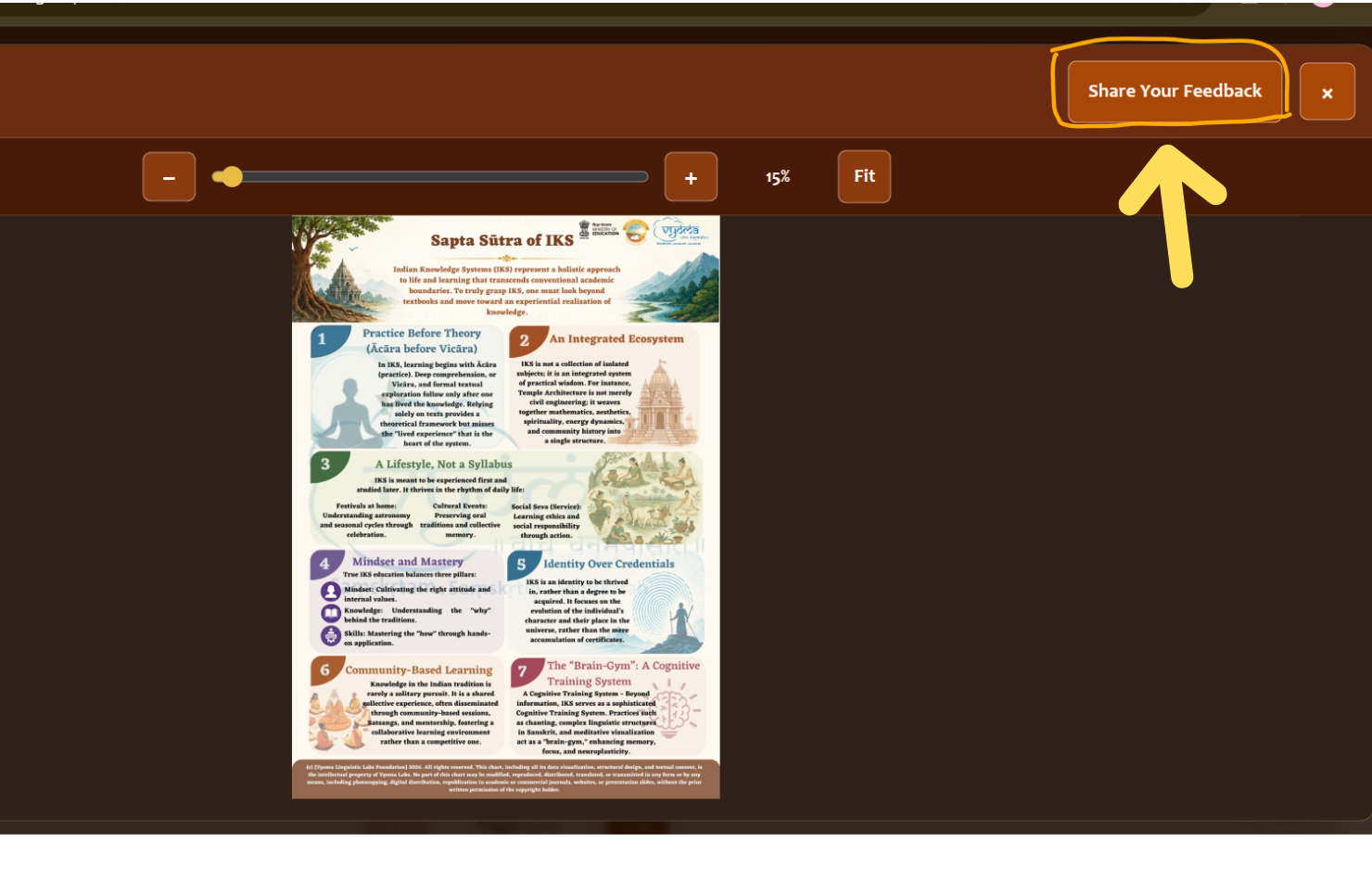
- Click on any chart to open it.
- Click the “Share Your Feedback” button located at the top-right corner.
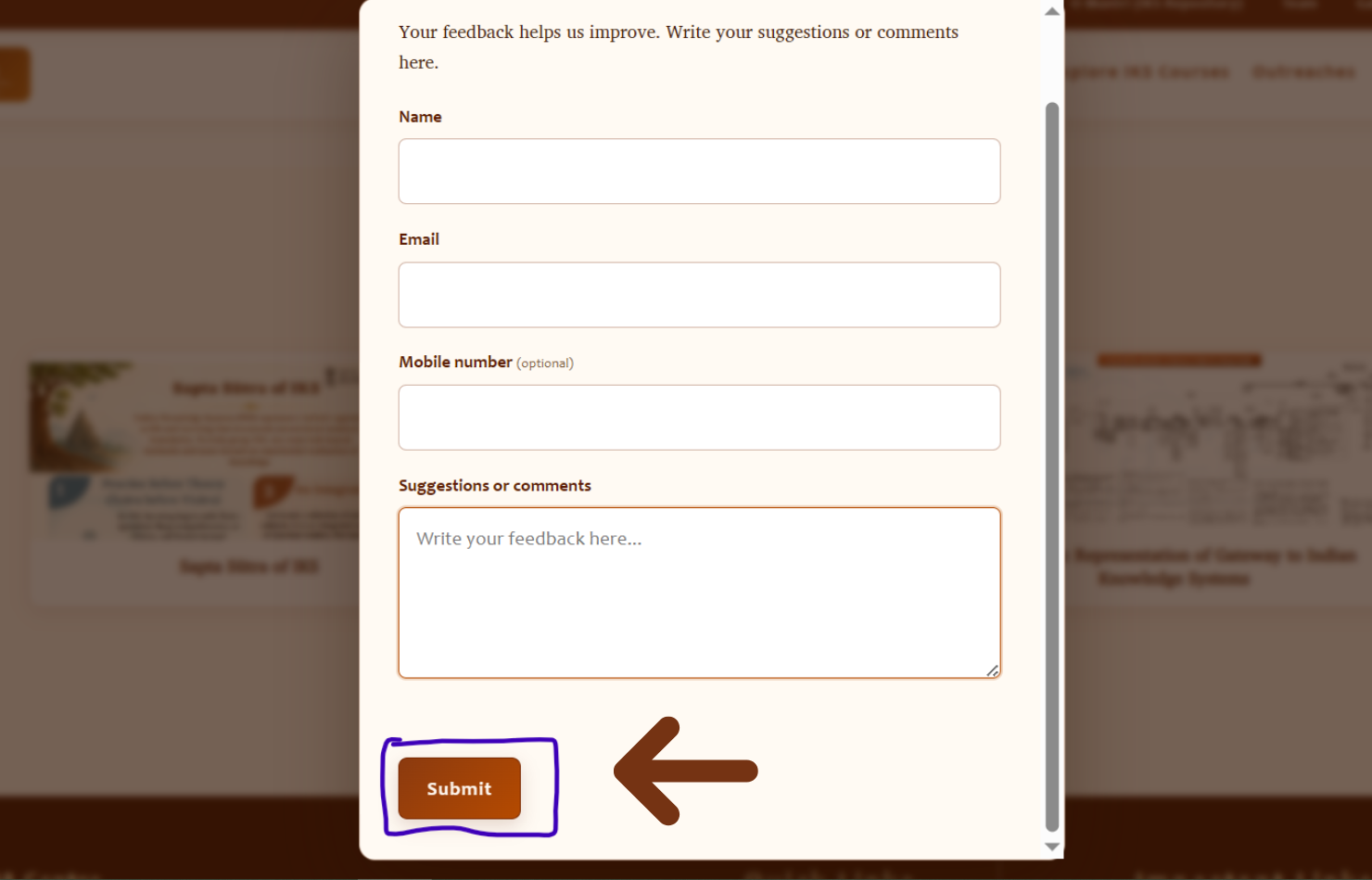
- Fill in the required details in the feedback form.
- Enter your suggestions or comments.
- Click “Submit” to submit your feedback.